Stay on Your Feet: How Addressing Hearing Loss Protects Your Independence
Al Turri, Au.D.
You might already know that one in four adults over age 65 experiences a fall each year. These falls can result in serious injuries, hospital stays, and even a permanent loss of independence.
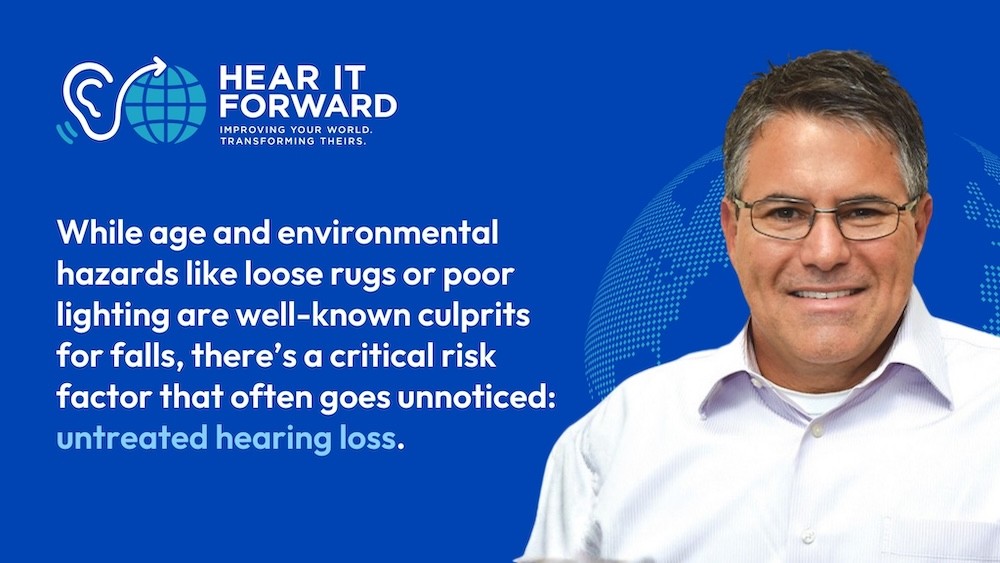
While age and environmental hazards like loose rugs or poor lighting are well-known culprits for falls, there’s a critical risk factor that often goes unnoticed: untreated hearing loss.
When you pay attention to your hearing health, you’re not just improving your ability to communicate. You’re taking an essential step toward protecting your physical safety and quality of life.
By seeking expert-led care from trusted providers like Hear it Forward, you benefit from a holistic approach to your well-being.
The Science Behind the Tripled Risk
You may be surprised to learn that even a mild hearing loss can dramatically increase your risk of falling.
Research reveals that just a 25 dB hearing loss, considered mild, can triple your risk of a fall. For every additional 10 dB of hearing loss, your risk increases by a staggering 140%.
Here’s how the risk breaks down:
Mild Hearing Loss (25 dB): 3x greater risk of falling
Moderate Hearing Loss: 5x greater risk
Severe to Profound Hearing Loss: 7–10x (or more) greater risk
Understanding these numbers empowers you to take meaningful action. The earlier you address hearing loss, the better your chances of maintaining balance and preventing injuries.
Why Hearing Challenges Can Cause Imbalance
Reduced Environmental Awareness
When your hearing is compromised, you miss important auditory cues in your environment. Sounds like footsteps, alarms, or even a pet moving nearby help you stay oriented and alert to potential hazards.
If you’re unable to hear these cues, you’re more likely to trip or lose your balance.
Cognitive Overload
Your brain works overtime to compensate for hearing struggles. When so much mental energy is devoted to understanding speech and sounds, fewer resources are available for other vital tasks, like maintaining your balance.
This cognitive overload can leave you more vulnerable to slips and falls, especially in unfamiliar or crowded settings.
Vestibular Health
The inner ear is responsible for both hearing and balance. Many conditions that affect your hearing can also impact your vestibular system, the part of your ear that helps control balance.
By treating hearing loss challenges, you’re also supporting the overall health of your balance system.
The Consequences of Falls
Physical & Mental Health
A fall can lead to broken bones, head injuries, and lengthy hospital stays. But the consequences go beyond the physical.
You may find yourself feeling isolated or anxious about moving around, which can lead to depression and a decline in your overall quality of life.
Financial Burden
Falls are not only devastating on a personal level; they’re also costly. In 2020, healthcare costs for non-fatal falls in the US were $80 billion, with the majority paid by Medicare.
By proactively managing your hearing health, you contribute to lowering these costs for yourself and the healthcare system.
Lifestyle Impact
After a fall, many people experience reduced mobility and may need to rely on others for daily activities. You benefit from maintaining your independence when you take steps to prevent falls before they happen.
Proactive Solutions: The Thrive 360 Hearing Assessment
What Is the Thrive 360 Hearing Assessment?
The Thrive 360 hearing assessment at Hear it Forward is a comprehensive evaluation designed to give you a complete picture of your hearing health.
This assessment doesn’t just measure your ability to hear tones; it assesses how well you understand speech in real-world situations and identifies subtle hearing challenges that could impact your safety and independence.
How You Benefit
You can rest assured that a Thrive 360 assessment provides you with actionable insights into your hearing health. With this information, you receive:
A thorough understanding of your current hearing abilities
Personalized recommendations for hearing solutions, such as amplification devices (hearing aids) tailored to your needs
Guidance on next steps to support your balance and overall wellness
By addressing hearing loss proactively, you’re giving yourself the best chance to stay active, independent, and confident.
Hearing Well to Live Well
Treating hearing challenges isn’t only about making conversations easier; it’s about ensuring you stay active, safe, and independent for as long as possible. By prioritizing your hearing health with a Thrive 360 assessment, you’re investing in your overall well-being.
Ready to take the next step? You can take control of your future by getting in touch with us at Hear it Forward. Expert-led care provides you with the tools and support you need to stay on your feet and enjoy life to the fullest!
FAQs
Q: How does hearing loss increase my risk of falling?
A: You rely on your hearing to detect important environmental cues like approaching footsteps, alarms, or even subtle changes in your surroundings. When your hearing is impaired, your brain works harder to process sounds, leaving fewer mental resources for balance and coordination. This combination of reduced awareness and cognitive overload significantly increases your risk of falling.
Q: What is a Thrive 360 hearing assessment, and how can it help me?
A: A Thrive 360 hearing assessment is a comprehensive evaluation of your hearing abilities, including how well you understand speech in everyday environments. This assessment helps identify hearing challenges that may increase your risk of falls. You benefit from personalized recommendations and support, empowering you to take proactive steps for your safety and independence.
Q: When should I get my hearing checked?
A: If you’re over age 60, have noticed changes in your hearing, or have experienced a fall or near-fall, now is the time to schedule an assessment. Regular hearing checks allow you to catch potential issues early and take action to stay safe and active.
Sources
JAMA Network: Find out more about the research linking hearing challenges and fall risk here!
National Library of Medicine: To discover how healthcare expenditure has changed over the years, read this comprehensive study.